Play Lightning Ball Game
Lightning Ball Game Review
Lightning Ball is built around a very clear idea: buy one or more tickets, watch six balls get drawn, and hope your numbers line up in the right order. The game includes a lightning multiplier element, which can lift a modest result into something more interesting if the Powerball lands your way. Evolution made sure this release feels less like a classic table title and more like a fast studio lottery with a polished casino finish.
Theme & Graphic
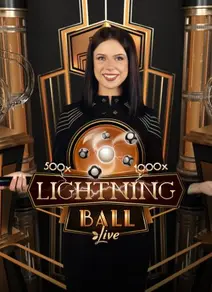
The studio is one of the first things that helps Lightning Ball settle into its own identity. Everything leans into black, gold, and amber tones. Two transparent draw machines stand on either side of the presenter, with the central display showing the main results as the round unfolds. The layout looks clean enough that you can follow what is happening even when several tickets are in play at once. What makes the game enjoyable is that Evolution did not overcomplicate the presentation. The lighting effects and electric flashes are there, especially when the multiplier values appear, but they do not swallow the screen. Throughout each round the host remains central, the machines are always visible, and the drawn numbers are easy to track. That matters in a game like this because there can already be a lot going on once ticket rows start filling the bottom of the screen. Overall, it feels modern, private and well-organised.
Payout Table
Lightning Ball pays according to how many numbers on a single ticket match the final draw. Each ticket contains five standard numbers from 1 to 30 and one Powerball number from 1 to 10. To produce a winning ticket, at least two numbers must match, including the Powerball. The payout ranges below reflect how lightning multipliers can raise the result beyond the base level.
| Number of Matches | Potential Payout |
|---|---|
| 2 Matches | 1 to 49:1 |
| 3 Matches | 4 to 249:1 |
| 4 Matches | 14 to 749:1 |
| 5 Matches | 99 to 4,999:1 |
| 6 Matches | 999 to 49,999:1 |
Game Features
Lightning Ball is not built around bonus rounds in the usual sense, but it does have a few key mechanics that shape the game and give each draw its tension.
Lightning Multipliers
Once the five main balls are drawn, some of those numbers receive lightning multiplier values. These can reach values of up to 50x. In practice, this is the moment where the round becomes more fun to watch, because suddenly a ticket that looked ordinary can carry a bit more weight.
Powerball Match
The sixth ball comes from a separate drum containing numbers from 1 to 10. This is the Powerball, and it matters a lot because the ticket needs that match along with at least one regular number match to qualify as a winner. If the winning ticket also contains a lightning number, the multiplier is applied to that payout.
Multiple Ticket Bundles
Instead of entering with just one line, players can opt for ticket bundles. Up to 200 tickets can be purchased in a round, and the interface displays quick choices such as 1, 25, 50, and 100 tickets.
Game Mechanics
The round structure is straightforward enough that it still has a clear mechanical flow. First, you choose how many tickets to buy. Each ticket is prefilled with five main numbers and one Powerball number. Then the main drum draws five balls from the 1 to 30 range. Those numbers are checked against every active ticket and any matches are marked immediately on screen.
After that, the lightning values are assigned to selected drawn numbers. Then the second machine draws the Powerball from the 1 to 10 range. If a ticket has the right Powerball and enough total matches, it becomes a winning ticket. If one of those matches is tied to a lightning value, the payout can increase sharply.
Similar Games
- Mega Ball: A live lottery-style draw game where players buy tickets, match numbers, and hope a final bonus ball boosts the result.
- Crazy Balls: A fast-paced number draw game that mixes ticket-based gameplay with multiplier balls that can raise the value of winning matches.
- Monopoly Big Baller: A live-hosted number game where players follow drawn balls on multiple cards while bonus rounds introduce larger potential payouts.
Smooth Spins’ Opinion
Lightning Ball may be a good choice when you want something lighter than blackjack or roulette, but still want a live host and a real studio setup. That is probably its strongest quality. It does not ask much from the player, yet it still feels active because each round has a few natural suspense points: the first five numbers, the lightning reveal, and then the Powerball. We also think the game benefits from not pretending to be more complicated than it is. There is no deep strategy here, and Evolution does not really try to dress it up as one. You purchase tickets, watch the draw, and see whether the multiplier turns a decent result into a better one. For some people that will make it a nice change of pace. For others, the lack of decision making may feel a little thin over longer sessions. Still, as a live casino option, it has a clean look, quick pacing, and rules that are easy to grasp without needing a long explanation. That alone gives it a practical appeal.